Digital Paper Mockup Canva Templates: Elevate Your Visuals
Let’s be real for a second: in the crowded digital marketplace, a flat image often falls flat. Whether you are launching a new course, showcasing a brand identity package, or selling digital planners on Etsy, the presentation matters just as much as the content itself. This is where the strategic use of Digital Paper Mockup Canva Templates changes the game. It isn't just about showing off a design; it's about creating a tactile, immersive experience for your audience without ever picking up a camera. For the entrepreneur, the graphic designer, or the content creator, these templates bridge the gap between a digital concept and a physical reality, allowing your clients to visualize exactly what they are buying.
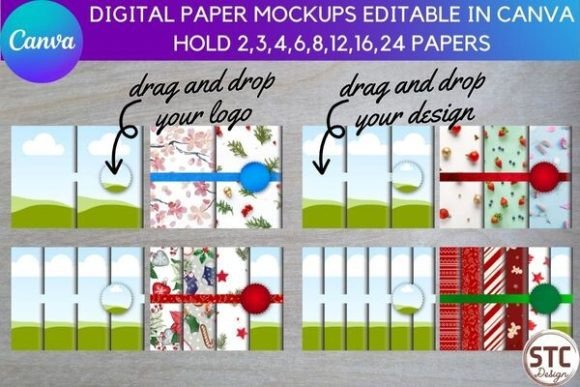
So, what exactly are we talking about here? At its core, this product is a bridge. It is a digital asset designed to sit inside Canva, utilizing "Smart Frames." Think of it as a window into a stylized reality. You receive a PDF with a link that opens directly into the Canva editor (compatible with both Free and Pro versions). The visual characteristics are designed to be photorealistic yet highly stylized. We aren't looking at generic stock photos; we are looking at textures—digital paper that feels like it has weight, grain, and depth. The personality of these templates often leans towards the artisanal and the professional. It mimics the look of high-end stationery, textured cardstock, or elegant letterpress, offering a sophisticated backdrop that elevates any design placed upon it.
The Power of Context: Why Mockups Define Brand Perception
In the world of modern typography and brand identity, context is everything. You could design the most beautiful script font or a bold sans serif font layout, but if it sits on a blank white void, it lacks soul. By using Digital Paper Mockup Canva Templates, you instantly inject personality into your work. This is particularly vital for packaging design and editorial design. When a client sees their logo or their book cover mocked up on a textured surface, the perception of value increases. It signals that you, the creator, care about the details. It transforms a simple logo design concept into a tangible brand asset.
Consider the impact on social media graphics. The algorithm favors engagement, and users scroll quickly. A standard flat graphic might get lost, but an image that looks like a physical object—perhaps a flyer or a business card resting on a marble slab or a linen cloth—stops the thumb. It creates a visual hierarchy that draws the eye. This isn't just about aesthetics; it's about psychology. When your audience sees a physical representation of a digital product, they are more likely to trust the quality of the underlying design assets. It helps in building a consistent visual language across your web design and offline marketing materials.
Practical Application: Integrating Templates into Your Workflow
The beauty of this specific asset lies in its simplicity. You don't need to be a Photoshop wizard to create stunning visuals. The instructions are straightforward: drag and drop. However, to truly master the use of these templates, you need to think like a design strategist. Here is how you can practically apply these mockups to various projects:
- For the Font Designer: If you are selling a premium font—be it a handwritten font, a serif font, or a display font—you need to show it in action. Use the digital paper texture to create a specimen sheet. The paper grain adds a tactile quality that makes the letterforms feel real.
- For the Digital Product Seller: Selling Canva templates or digital planners? Don't just show screenshots. Mock them up on these paper templates to show how they might look if printed, or to give them a "lifestyle" feel that resonates with buyers.
- For the Marketing Agency: When pitching a rebrand or a new brand identity, presentation is half the battle. Showing a client their new creative font pairings and color palette on a sophisticated paper mockup adds a layer of professionalism that a PDF deck alone cannot achieve.
Mastering the Details: Readability and Hierarchy
While the aesthetic appeal is high, we must address the functional side of design. How does a textured background impact readability? This is a crucial consideration. If you are placing body text—a sans serif font designed for long-form reading—onto a heavily textured digital paper, you risk losing legibility. The "noise" of the paper texture can clash with the intricate details of smaller letterforms.
The practical recommendation here is to use these mockups for headlines, logos, and display text where impact is the goal. If you must use body text, ensure there is sufficient contrast. You might also consider using the "Smart Frame" feature to double-click and adjust the design so that the text sits on the smoothest part of the paper texture. Furthermore, think about visual hierarchy. Use the mockup to frame your content. The texture should support the message, not compete with it. A bold display font on a rough paper texture creates a rugged, masculine vibe, while a delicate script font on a smooth, cream-colored paper feels feminine and elegant. It is all about the pairing.
Commercial Use and Terms of Service
One of the most significant advantages of this asset is the licensing. The terms of use are generous and clear: you are allowed to use the images in every commercial way. This is a relief for small business owners and freelancers who often get tangled in complex licensing agreements. You can use these mockups in client work, on your website, in your Etsy listings, and in your social media campaigns.
However, the restriction is standard and fair: you cannot resell or redistribute the templates as is. You cannot simply take the Canva link and sell it to someone else as a "Mockup Pack." The value must be added by you—the designer, the creator, the brand strategist. You are using the tool to create a new end-product. Also, note the policy on returns: because this is a digital file, all sales are final. There is no "un-downloading" a PDF. This is standard practice in the digital asset world and protects the intellectual property of the creator.
Conclusion: Elevating Your Digital Presence
In summary, Digital Paper Mockup Canva Templates are more than just pretty pictures; they are a functional business tool. They allow you to present your design assets with the weight and gravity they deserve. Whether you are working on web design, packaging design, or social media graphics, these templates provide the context needed to make your work shine. They bridge the gap between the screen and the hand, giving your digital products a physical presence that builds trust and drives engagement. If you are serious about your visual branding, integrating these high-quality, textured backgrounds into your Canva workflow is a smart, practical move that will pay dividends in client perception and sales conversion.